Seneca Falls and the Long Suffrage
On July 19, 1848, three hundred delegates met in upstate New York and demanded the vote. Seventy-two years later, the Nineteenth Amendment was ratified.
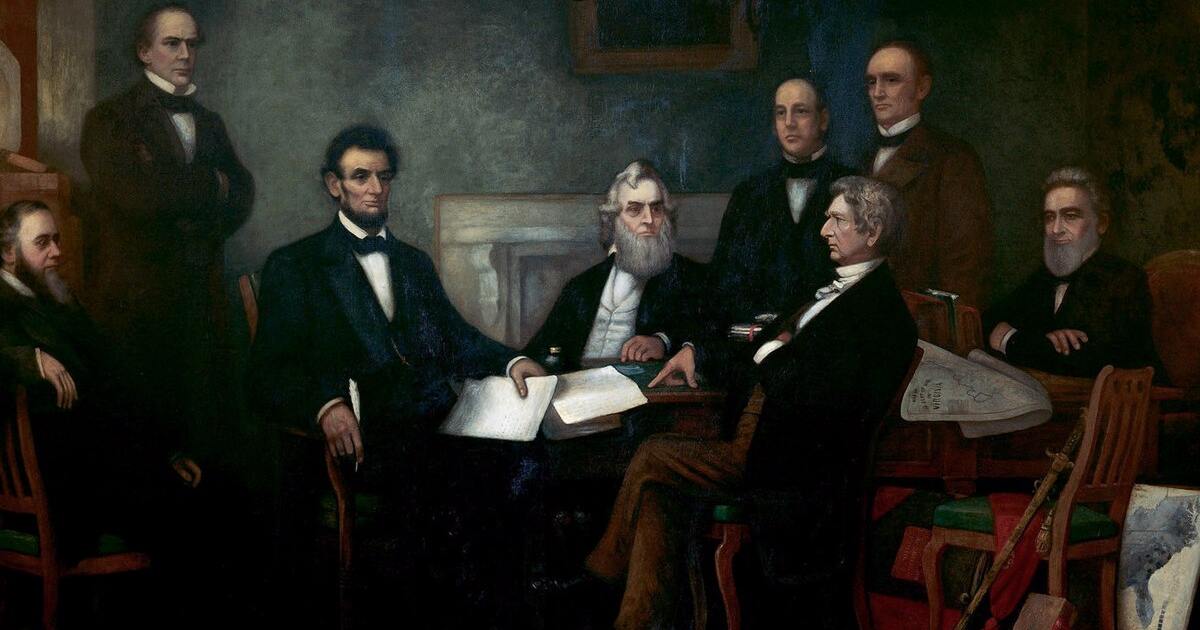
Lincoln issued the preliminary Emancipation Proclamation on September 22, 1862, five days after the Battle of Antietam. The final proclamation took effect January 1, 1863. It applied only to the ten Confederate states still in rebellion — not to the four border slave states, not to areas already under Union control. Its legal force depended on Union military presence. Where the army went, enslaved people were free; where the army was absent, the proclamation was paper.
“All persons held as slaves within any State or designated part of a State, the people whereof shall then be in rebellion against the United States, shall be then, thenceforward, and forever free.”
— Emancipation Proclamation, signed by Abraham Lincoln, January 1, 1863
Lincoln had argued for nearly two years that the war’s purpose was to preserve the Union, not to end slavery. He had assured slaveholders in the border states that their property in human beings would be protected. He had reversed orders from Union generals — John C. Frémont in Missouri (1861) and David Hunter in South Carolina (1862) — that had declared local emancipation. The shift came in mid-1862. The war was going badly. Britain and France were considering recognition of the Confederacy. Lincoln concluded that emancipation would weaken Confederate labor, discourage European intervention, and authorize Black enlistment in the Union Army.
The preliminary proclamation of September 22, 1862, gave the seceding states one hundred days to return to the Union or face emancipation of their enslaved people. None returned. The final proclamation took effect on January 1, 1863. Its limits were strategic: it applied only to the ten states then in rebellion. The four border slave states (Kentucky, Maryland, Missouri, Delaware) were exempted — Lincoln needed them in the Union and could not constitutionally free their enslaved people through a war power. Tennessee, where Union forces controlled most of the state, was also exempted. Parishes around New Orleans, also Union-held, were exempted.
The proclamation’s most immediately consequential clause authorized the recruitment of Black soldiers. Within a year, the United States Colored Troops fielded 100,000 men; by war’s end, nearly 200,000. They served at higher casualty rates than white units, at lower pay until 1864, and largely under white officers. The 54th Massachusetts Volunteer Infantry — depicted in the 1989 film *Glory* — assaulted Fort Wagner in July 1863 and lost more than 40 percent of its men. Frederick Douglass, whose son Lewis served in the 54th, had argued that Black military service would make Black citizenship impossible to refuse.
The proclamation did not end slavery legally. That required a constitutional amendment. The Thirteenth Amendment passed the Senate in April 1864, the House in January 1865, and was ratified by the states on December 6, 1865 — after Lincoln had been killed. The exception clause in the amendment — “except as a punishment for crime whereof the party shall have been duly convicted” — created a loophole that southern states used in the late nineteenth century to re-enslave Black labor through convict leasing, peonage, and discriminatory criminal codes. The Equal Justice Initiative has documented the continuity into the modern era.
The proclamation’s practical effect spread slowly across the South as the Union Army advanced. The last enslaved people in the Confederacy to receive the news — in Galveston, Texas, on June 19, 1865 — celebrate that date as Juneteenth. Congress made it a federal holiday in 2021. The legal end of slavery did not prevent the rise of sharecropping debt peonage, convict leasing, lynching, the convict-lease system, Jim Crow, or the urban segregation that replaced southern legal codes after the Great Migration. The amendment that ended slavery left enough room for what came after.
On July 19, 1848, three hundred delegates met in upstate New York and demanded the vote. Seventy-two years later, the Nineteenth Amendment was ratified.
On May 17, 1954, the Supreme Court ruled unanimously that “separate but equal” had no place in public schools. Linda Brown was in third grade. Implementation took decades.
A. Philip Randolph called for it in 1941; Bayard Rustin organized it in 1963. Two hundred and fifty thousand people gathered on August 28. King delivered his speech that afternoon.