Emancipation Proclaimed
On January 1, 1863, Lincoln declared enslaved people in rebellious states “forever free.” The proclamation freed no one immediately. The army that came after did.
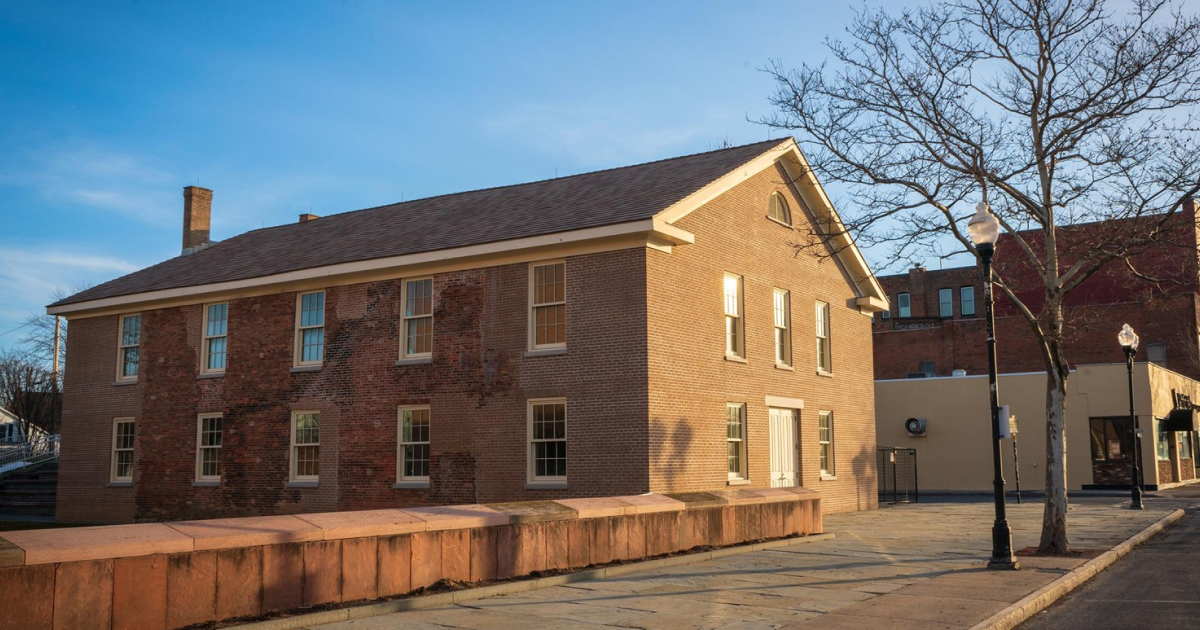
Elizabeth Cady Stanton and Lucretia Mott had met in London in 1840 at the World Anti-Slavery Convention and been refused seats on the floor because they were women. Eight years later they organized a two-day convention at the Wesleyan Methodist Chapel in Seneca Falls, New York. The Declaration of Sentiments, modeled on the Declaration of Independence, listed eighteen grievances and demanded the vote — the most controversial demand on the list. One hundred attendees signed, including Frederick Douglass, who was the only Black participant.
“We hold these truths to be self-evident: that all men and women are created equal; that they are endowed by their Creator with certain inalienable rights; that among these are life, liberty, and the pursuit of happiness.”
— Declaration of Sentiments, Seneca Falls Convention, July 19, 1848
The Declaration of Sentiments listed eighteen “injuries and usurpations on the part of man toward woman” — the denial of suffrage, the legal subordination of married women to their husbands, the exclusion from professions, the unequal treatment in divorce and child custody, the moral double standard, the closed doors of colleges. The demand for the vote was added at the convention itself, against Mott’s caution that it would alienate sympathizers. Stanton insisted. Frederick Douglass, who had escaped slavery a decade earlier and was publishing The North Star out of Rochester, rose to defend the demand. It passed by a narrow margin.
Sojourner Truth gave her “Ain’t I a Woman?” speech four years later at the Akron, Ohio women’s rights convention. The exact wording that survives — published by Frances Dana Barker Gage twelve years later — has been disputed by historians; Truth’s actual speech was almost certainly delivered in a Dutch-inflected accent, not the southern dialect Gage rendered. But the substance was true: a formerly enslaved Black woman insisting that the women’s movement could not be only about white women, and could not be only about middle-class concerns.
The Fifteenth Amendment in 1870 enfranchised Black men but not women — including Black women. Suffragists split bitterly. Stanton and Susan B. Anthony opposed it; Lucy Stone, Henry Blackwell, and Frederick Douglass supported it as a necessary first step. The National Woman Suffrage Association (Stanton-Anthony) and the American Woman Suffrage Association (Stone-Blackwell) rivaled each other for twenty years before merging as NAWSA in 1890. The merger’s leadership accommodated Southern white suffragists by quietly accepting segregation in the movement; Ida B. Wells, the Black journalist and anti-lynching activist, was asked to march at the back of the 1913 Washington suffrage parade and refused, walking with her Illinois delegation as planned.
The tactics escalated in the 1910s. Alice Paul, who had trained with British suffragettes, founded the National Woman’s Party and began picketing the White House in 1917 — the first political group ever to do so. Picketers were arrested, charged with obstructing traffic, and held at the Occoquan Workhouse in Virginia. They went on hunger strike and were force-fed through tubes. The press coverage shifted public opinion. Woodrow Wilson, who had opposed the federal amendment, reversed in 1918. The Nineteenth Amendment passed Congress in June 1919.
Ratification required thirty-six states. Thirty-five had ratified by July 1920; Tennessee was the deciding state. The vote in the Tennessee legislature was tied. Twenty-four-year-old Harry Burn, voting against ratification under instructions from his party, received a letter that morning from his mother in Niota: “Don’t forget to be a good boy and help Mrs. Catt put the rat in ratification.” He changed his vote. The amendment was ratified on August 18, 1920. Black women in the South, however, would not actually vote in significant numbers until the Voting Rights Act of 1965 — forty-five years later. Ida B. Wells died in 1931, never having voted in the South.
On January 1, 1863, Lincoln declared enslaved people in rebellious states “forever free.” The proclamation freed no one immediately. The army that came after did.
On May 17, 1954, the Supreme Court ruled unanimously that “separate but equal” had no place in public schools. Linda Brown was in third grade. Implementation took decades.
A. Philip Randolph called for it in 1941; Bayard Rustin organized it in 1963. Two hundred and fifty thousand people gathered on August 28. King delivered his speech that afternoon.