1619

The First Enslaved Africans Arrive

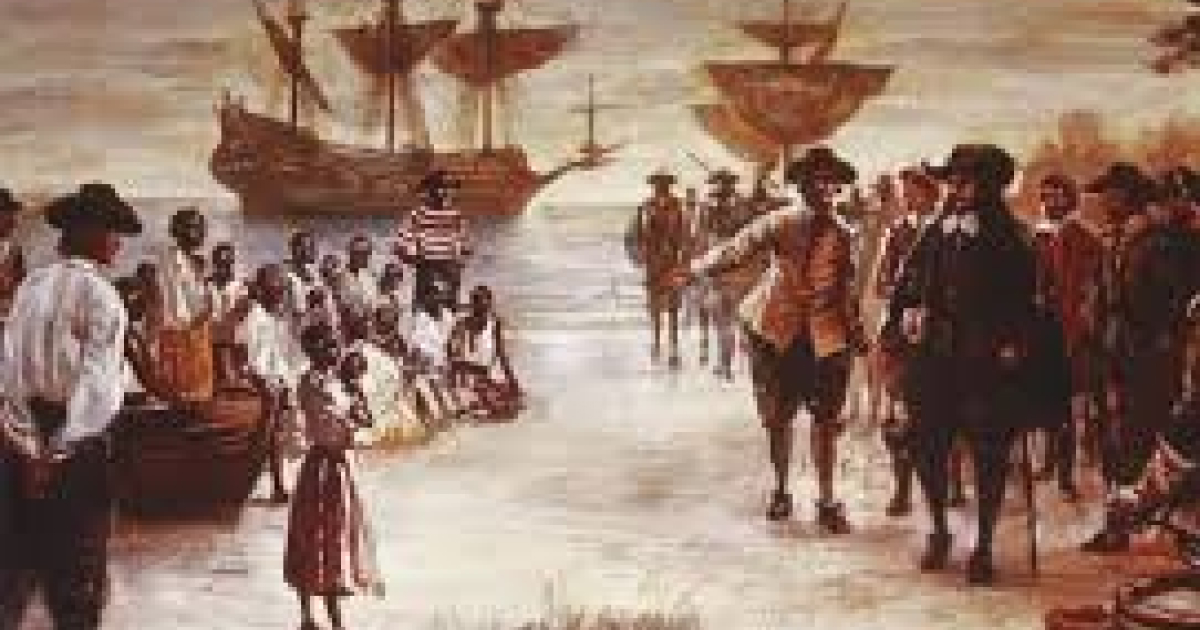
On August 20, 1619, the English privateer ship White Lion dropped anchor at Point Comfort — the entrance to the Chesapeake — and traded its cargo for provisions. The cargo was roughly twenty Africans, captured from a Portuguese slave ship called the São João Bautista off the Mexican coast. They were originally from the Kingdom of Ndongo and the Kingdom of Kongo in what is now Angola. John Rolfe, the colonial recorder, wrote to the Virginia Company that the ship had brought “20. and odd Negroes.” Their names mostly do not survive. Their bondage did.

Founding Era 2 min read · April 17, 2026 · Editorial Team

“20. and odd Negroes, w[hi]ch the Governo[r] and Cape Marchant bought for victuall[s].”

— John Rolfe to Sir Edwin Sandys, Virginia Company secretary, January 1620

The Angolans aboard the White Lion had been seized in Luanda by Portuguese forces fighting the Kingdom of Ndongo. They were marched to the coast and forced onto the São João Bautista, bound for Veracruz. The White Lion — sailing under a Dutch letter of marque — intercepted the ship in the Gulf of Mexico and took roughly fifty captives. Half died of disease or thirst on the voyage to Virginia. The survivors arrived at Point Comfort with no English, no rights under English law, and no return. The colonial court did not record their original names.

The legal status of those first Africans was ambiguous for nearly forty years. Some appear in court records as indentured servants — bound for fixed terms — and a few, like Anthony Johnson and his wife Mary, eventually held land and even enslaved others themselves. But by 1662 Virginia had codified the doctrine of partus sequitur ventrem: the child of an enslaved woman inherited the mother’s condition. By 1705 a comprehensive slave code locked race and bondage together. The ambiguity closed. The transatlantic slave trade brought roughly 388,000 captives directly to British North America over the next 150 years.

The captives who survived the Middle Passage labored in tobacco fields, then cotton, then sugar and rice. The plantation system was built on enslaved labor — the cotton gin, invented at a Georgia plantation in 1793, expanded the system rather than mechanizing it away. By 1860 the four million enslaved people in the United States represented an asset valued at more than the country’s railroads, banks, and factories combined. The Civil War’s official cause was the political settlement that protected slavery’s expansion. Reconstruction, the brief federal effort to enforce Black citizenship, was abandoned within twelve years of Appomattox.

Point Comfort sits today inside Fort Monroe National Monument on the Virginia coast. A bronze plaque marks the 1619 landing; the fort itself became a Union haven during the Civil War where escaped enslaved people sought asylum — General Benjamin Butler called them “contraband of war.” Ndongo, the kingdom most of the captives came from, fell to Portuguese expansion in 1671; its descendants live across Angola today. The 1619 Project, published by The New York Times Magazine in 2019, argued that the date deserves equal weight with 1776 in the American story. The argument is ongoing. The arrival itself is not.

Historical Record
Period
1619
Category
Founding Era
Archive
America 250 — 1776–2026
Share this story
Continue Reading

More from Founding Era

All Founding Era →
pre-1776

The Haudenosaunee Influence on American Democracy

The Six Nations of the Haudenosaunee Confederacy — Mohawk, Oneida, Onondaga, Cayuga, Seneca, Tuscarora — governed by a constitution older than the country that borrowed from it.

1776

The Declaration of Independence

On July 4, 1776, fifty-six delegates signed a document declaring that government draws its just powers from the consent of the governed. Many of them held people in bondage.

1787

The Constitution

Drafted in Philadelphia over four months in 1787, ratified by nine states in 1788. The oldest written national charter still in force — and the three-fifths compromise was in its original text.

Explore More Stories