pre-1776

The Haudenosaunee Influence on American Democracy

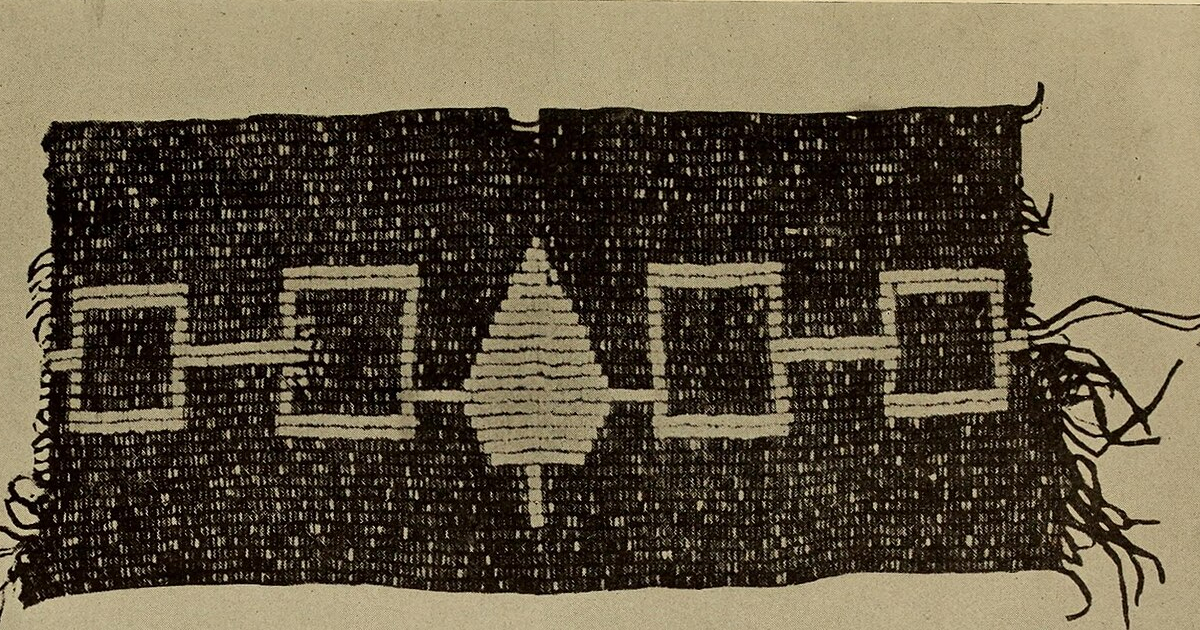
The Great Law of Peace, known to the Haudenosaunee as the Gayanashagowa, predates European arrival in the Northeast by at least three centuries; some oral histories trace it to the 12th. Five nations agreed to settle disputes through a council of fifty chiefs rather than warfare among themselves. The Tuscarora joined in 1722. The system relied on consensus, women’s councils that selected and could depose the male chiefs, and a constitution recorded on wampum belts.

Founding Era 3 min read · April 18, 2026 · Editorial Team

“Our wise forefathers established Union and Amity between the Five Nations. This has made us formidable. We are a powerful Confederacy; and by your observing the same methods our wise forefathers have taken, you will acquire much Strength and Power; therefore whatever befalls you, do not fall out with one another.”

— Onondaga sachem Canassatego to colonial delegates, Lancaster Treaty Council, 1744

The Confederacy’s council met at Onondaga in what is now central New York. Each of the five nations sent a delegation of chiefs (called sachems) chosen by the clan mothers — senior women of each maternal lineage. The chiefs could be deposed by the women who had selected them. The council operated by consensus rather than majority vote; a dissenting nation could block any decision. Issues were debated in rounds, with each nation’s delegation conferring separately and then reporting back. The procedure took days, sometimes weeks. It produced binding decisions that held the Confederacy together for at least four centuries before European contact.

Benjamin Franklin printed Iroquois treaty proceedings for the Pennsylvania colony beginning in 1736. In 1751 he wrote to a colleague that “it would be a very strange thing if six Nations of ignorant savages should be capable of forming a scheme for such an union and be able to execute it in such a manner as that it has subsisted ages and appears indissoluble, and yet that a like union should be impracticable for ten or a dozen English colonies.” His 1754 Albany Plan of Union — which proposed a colonial congress — was openly modeled on the Confederacy. The plan failed; the idea did not.

What the U.S. Constitution adopted: federated structure, separation of powers within a council, a chamber requiring deliberation. What it did not adopt: the women’s councils that selected and could depose leaders, the collective land-ownership principles, the consensus requirement, the peace-first orientation of the Great Law itself. The Confederacy’s laws prohibited expansionist war among member nations and required reciprocity with neighbors. The colonies that built on the Confederacy’s example did not feel bound by either principle.

The Confederacy split during the Revolution: four nations sided with the British (their long-standing trade partners), two with the Americans. After the war, U.S. and New York State forces seized most of the Iroquois homeland in violation of multiple treaties. The Treaty of Canandaigua (1794) restored some sovereignty in principle but not in practice. The Tuscarora and Oneida — who had sided with the Americans — fared no better than the Mohawk, Onondaga, Cayuga, and Seneca who had sided with the Crown.

In October 1988 the U.S. Senate passed Resolution 76, formally acknowledging the influence of the Iroquois Confederacy on the formation of the United States. The Haudenosaunee issue their own passports today, used for international travel by the Iroquois Nationals lacrosse team. The Grand Council still meets at Onondaga. The clan mothers still confer with the chiefs. The Great Law was never repealed.

Historical Record
Period
pre-1776
Category
Founding Era
Archive
America 250 — 1776–2026
Share this story
Continue Reading

More from Founding Era

All Founding Era →
1619

The First Enslaved Africans Arrive

August 20, 1619: the White Lion landed at Point Comfort with twenty Angolans aboard — the first documented enslaved Africans in English North America.

1776

The Declaration of Independence

On July 4, 1776, fifty-six delegates signed a document declaring that government draws its just powers from the consent of the governed. Many of them held people in bondage.

1787

The Constitution

Drafted in Philadelphia over four months in 1787, ratified by nine states in 1788. The oldest written national charter still in force — and the three-fifths compromise was in its original text.

Explore More Stories